
 Why this ancient, softly porous stone is quietly replacing cold marble in the most serene bathrooms of the moment.
The Quiet Power of Travertine: A Stone That Warms the Modern Bathroom
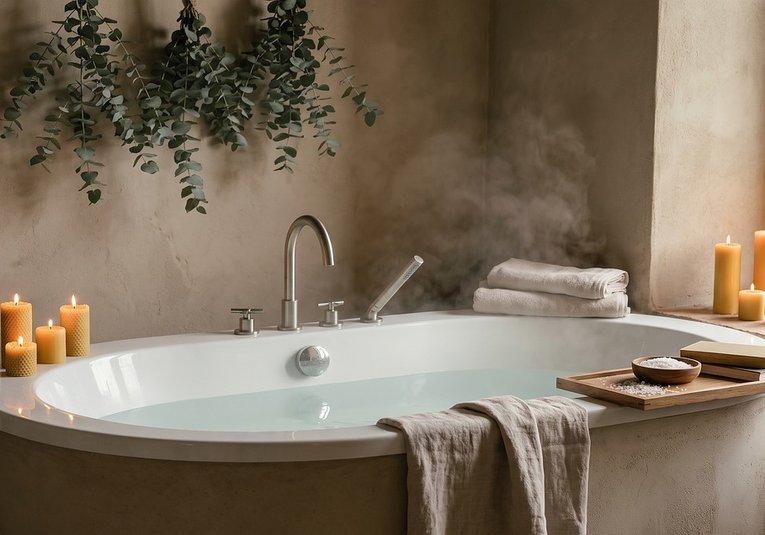
There is a particular kind of luxury that does not announce itself. It does not gleam or demand attention. It simply sits there, warm and certain, and makes you want to stay a little longer. Travertine has that quality. For decades it was the stone of Roman aqueducts and Florentine palazzos, and now it has found its way back into the bathroom, not as a relic but as a quietly modern choice for people who want warmth rather than spectacle.
Unlike polished marble, which reflects and refracts, travertine absorbs. Its surface is soft, often filled with the tiny pits and channels left behind by mineral springs. Those imperfections are the point. In a room where you stand barefoot on cool mornings and where steam drifts across every surface, a stone that feels grounded rather than grand changes the entire mood of the space.
Why Travertine Works in the Bathroom
The bathroom is a room of transitions. You enter it tired and leave it restored, or you enter it hurried and leave it composed. Materials that support that shift tend to be tactile rather than visual. Travertine, especially in a honed or tumbled finish, has a slightly chalky hand-feel that invites touch. It is also naturally slip-resistant when left unfilled, which makes it a sensible choice for shower floors and wet zones.
Color is another reason it has become so popular. The palette runs from ivory and cream to walnut and warm taupe, with subtle banding that reads almost like brushstrokes. These tones flatter skin, soften artificial light, and pair beautifully with brass, unlacquered copper, and matte black fixtures. They also work with the plants that so many of us now keep in bathrooms: a fern against a travertine wall looks less like decoration and more like a small landscape.
Designers often use travertine in large-format slabs for walls and smaller tiles for floors, letting the vein direction run horizontally to widen a narrow room. Others choose a single dramatic block for a sink or a bathtub surround. Both approaches work because the stone is forgiving. It does not fight the other elements in the room; it settles them.
How to Use It Without Overdoing It
The temptation with any beautiful stone is to use it everywhere, and that is precisely how a bathroom starts to feel heavy. A better approach is to let travertine be the anchor and give everything else room to breathe. Use it on the floor and one feature wall, then finish the remaining surfaces in limewash, microcement, or a soft matte paint. Keep the palette narrow. Add one or two textures that contrast with the stone: a linen curtain, a woven basket, a slab of dark wood.
Maintenance is gentler than people expect. Travertine is porous, so it should be sealed, particularly in wet areas, and re-sealed every year or two depending on use. Avoid acidic cleaners, which etch the surface, and wipe up oils and colored liquids before they set. With that small amount of care, the stone develops a patina that many people find more beautiful than the day it was installed.
What travertine offers, in the end, is a sense of time. In a room designed for ritual and recovery, that is no small thing. It reminds us that luxury does not have to be loud to be felt.