
 Why this trowel-applied finish is becoming the go-to choice for modern, minimalist bathrooms.
Scent as Architecture: Designing a Bathroom That Smells Like a Spa
We spend enormous energy designing what a bathroom looks like. We agonize over tile patterns, faucet finishes, and the exact shade of white for the walls. But the sense that most powerfully shapes our memory of a space is often the one we forget to design at all: smell. Walk into a luxury hotel spa and you will notice it before you notice anything else. That clean, green, slightly woody scent that seems to hang in the air is not an accident. It is part of the architecture.
The good news is that you do not need a commercial diffuser system or a staff of aromatherapists to achieve the same effect at home. Scent is one of the most affordable and most impactful upgrades you can make to a bathroom, and it works on a simple principle: layer, do not overwhelm. A single candle is nice. A considered scent landscape is transformative.
The Three Layers of Bathroom Fragrance
Think of your bathroom scent the way you think about lighting. You want a base layer that is always present, a middle layer that shifts with the seasons, and a top layer that responds to the moment. For the base layer, consider a reed diffuser or a small electric diffuser placed away from the toilet and the shower, where it will not be overwhelmed by other odors. Choose something soft and clean: white tea, fig leaf, or a light cedar. This is the scent that greets you when you walk in, and it should feel like a deep breath rather than a punch.
The middle layer is where you can have some fun. This is your seasonal rotation. In winter, a candle with clove, amber, or smoke. In summer, something brighter like bergamot, neroli, or sea salt. Keep two or three options on hand and switch them out when the weather changes. This small ritual keeps the room feeling alive and prevents scent fatigue, which is what happens when your nose stops noticing a fragrance because it is always the same.
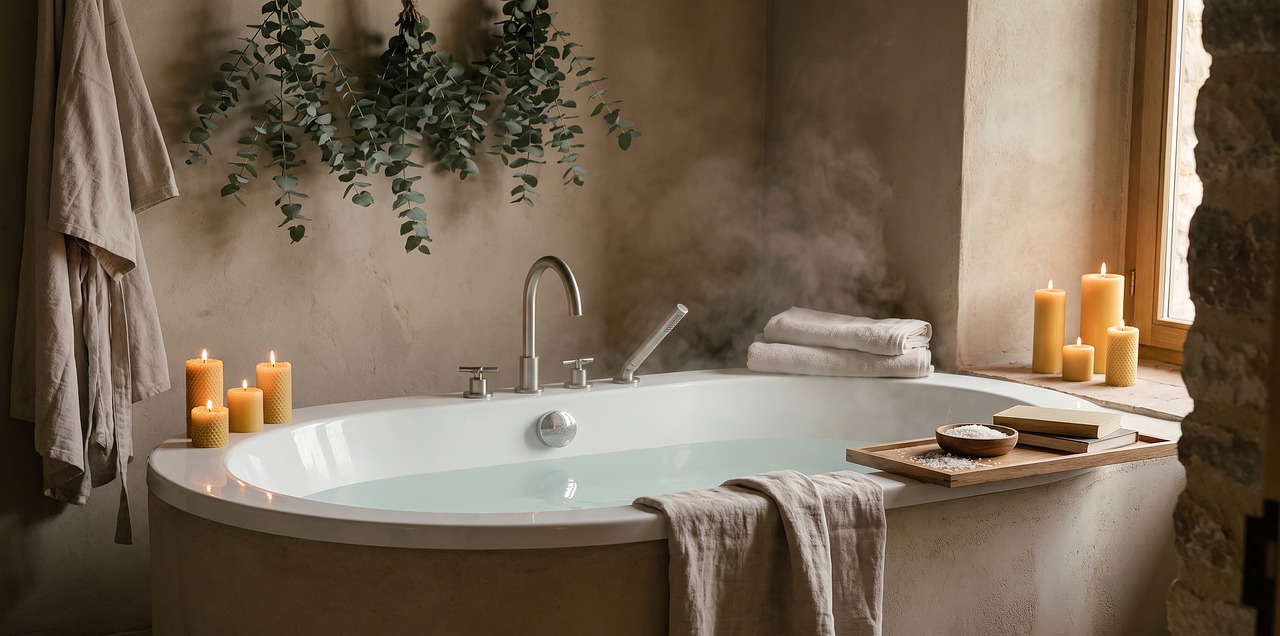
The top layer is the most ephemeral and the most powerful. It is the scent that appears only when you use the room. A bar of triple-milled soap with a strong fragrance, a bottle of bath oil, a sprig of fresh eucalyptus hung from the showerhead. These are the accents that turn a routine into a ritual. They do not need to be expensive. A bundle of dried lavender tied with twine costs almost nothing and releases its scent every time the steam rises.
Designing for Scent, Not Just Around It
If you are building or renovating, there are a few design decisions that will make scent work harder for you. Ventilation is the first. A bathroom that traps moisture will also trap odors, and no amount of candle burning will fix that. A properly sized exhaust fan or, better yet, a window that opens, is the foundation of a fresh-smelling room. Second, consider your surfaces. Porous materials like unsealed stone and untreated wood can absorb odors over time. Sealing them is not just about protection; it is about keeping the room neutral so your chosen fragrance can do its job.
Third, think about where you place your scent sources. Heat and steam amplify fragrance, so a candle near the tub or a diffuser near the shower will throw scent more effectively than one tucked in a corner. But be careful not to place anything directly in the path of water. A small ledge or niche is ideal.
Finally, remember that the most luxurious scent is often the absence of any scent at all. The goal is not to mask a bad smell with a good one. It is to create an atmosphere that feels clean, calm, and intentional. When you get it right, you will not notice the fragrance as a separate thing. You will simply notice that the room feels better than it did before.