 Rethinking the most predictable piece of furniture in the bathroom and what you gain when you let it go.


The Psychology of the Spin: Why You Really Play Slots
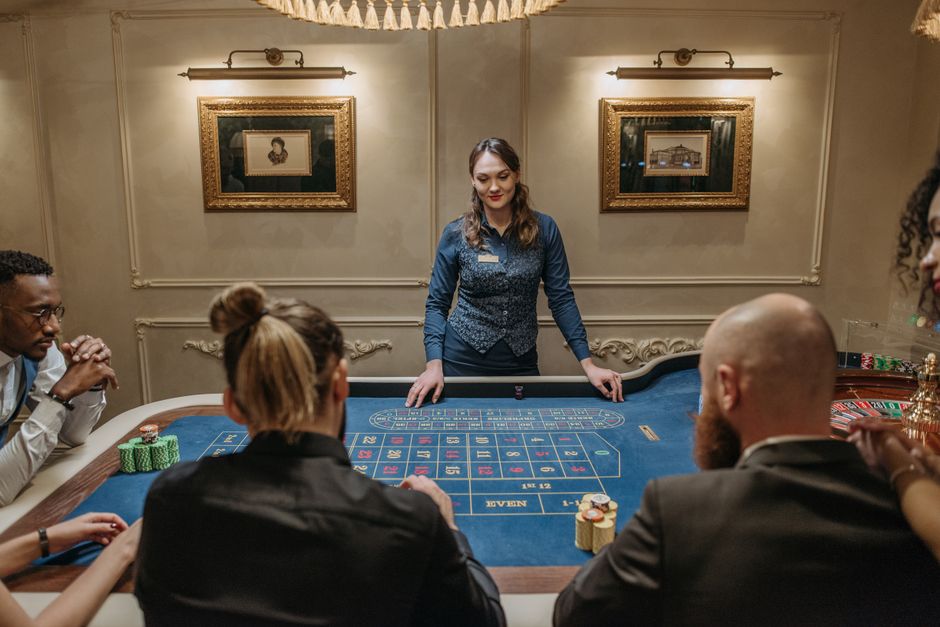
You hit spin. The reels blur, the symbols snap into place, and for half a second, your brain forgets everything else. No bills, no emails, no existential dread—just the electric maybe of three cherries lining up. That momentary escape isn't an accident. Slot designers, game mathematicians, and behavioral psychologists have spent decades perfecting the art of keeping you glued to the chair. And while most players think they're just killing time, there's a complex neurochemical dance happening underneath.
Understanding that dance won't necessarily stop you from playing. But it might change how you play—and that's worth something whether you're a casual spinner or a high-stakes grinder.
The Near-Miss Paradox: Your Brain Can't Tell the Difference
Here's something the industry knows that most players don't: a near miss—two jackpot symbols with the third one just above or below the payline—activates the same reward pathways in your brain as an actual win. fMRI studies have shown that near misses light up the ventral striatum, the region associated with reward processing, almost as strongly as a real payout. The kicker? That activation makes you more likely to keep spinning, not less. You will find a helpful summary at slot mahjong.
Modern slot machines are engineered to deliver near misses at a frequency far higher than random chance would dictate. On a five-reel video slot, you might see a near miss on the bonus trigger once every 40 spins instead of once every 160. That's not luck. That's design. The machine isn't rigged in the sense that outcomes are predetermined—each spin is independent—but the reel strips are weighted to produce those tantalizing almosts.
What can you do with this information? Recognize the feeling. When you catch yourself thinking "I was so close," remind yourself that close doesn't pay. The machine doesn't owe you a win because it teased you. Every spin is a fresh roll of the dice, and your brain's reward system is being deliberately manipulated.
Poker: Where the Psychology Cuts Both Ways
Slots are a solo game against a machine. Poker is a war against other humans—and that changes everything. The same near-miss dopamine that hooks slot players can destroy your poker bankroll if you let it. Tilt is the poker term for emotional decision-making, and it's the single biggest leak for amateur players.
Think about the last time you lost a big pot to a two-outer on the river. Your gut churned. Your face flushed. You immediately wanted to rebuy and "get it back." That's the near-miss trap in a different costume. The math hasn't changed—you made a profitable bet and got unlucky—but your brain interprets the loss as a personal insult.
Experienced players develop rituals to combat this. Some set strict stop-loss limits before a session. Others take a five-minute walk after every bad beat. A few track their all-in expected value separately from actual results, so they can see objectively whether they're playing well regardless of short-term variance.
- Stop-loss rule: Decide in advance how many buy-ins you're willing to lose in one session. When you hit that number, you're done. No exceptions.
- Hand history review: After a session, review the three biggest pots you lost. Were the decisions correct? If yes, the result doesn't matter.
- Physical reset: Stand up, stretch, get water. Tilt is chemical as much as psychological, and disrupting the physical state helps break the loop.
The RNG Myth and What Actually Matters
Let's clear up the biggest misconception in casino gaming: Random Number Generators (RNGs) do not "warm up" or "go cold." A slot machine that hasn't paid out in 500 spins is not due. A poker deck that just dealt four aces doesn't have fewer aces left. Each outcome is independent of the last.
What does matter is volatility and return-to-player (RTP) percentage. A low-volatility slot like Starburst (RTP around 96.1%) pays small amounts frequently, stretching your bankroll but rarely delivering a life-changing hit. A high-volatility monster like Book of Dead might have a similar RTP but can go 200 spins without a meaningful win, then explode for 5,000x. Neither is "better"—they're different risk profiles.
Smart players match volatility to their goals. If you want a long session with a modest bankroll, stick to low-volatility games. If you're chasing a big score and don't mind busting quickly, high-volatility slots are your lane. But never chase losses on a high-volatility game with money you need for rent. That's not gambling—that's desperation, and the machine can smell it through the screen.
Betting Systems That Don't Work (and One That Does)
Every few years, a new betting system goes viral. The Martingale (double your bet after every loss) is the oldest and most seductive. It seems foolproof: eventually you have to win, and when you do, you recoup everything plus one unit. The problem is table limits and bankroll limits. A $10 bet doubling ten times becomes $10,240. Most tables cap at $500 or $1,000. And even if they didn't, one bad run wipes you out.
The Fibonacci system (bet the sum of the previous two bets after a loss) is gentler but suffers the same fundamental flaw: it assumes infinite money and infinite time. Neither exists.
Here's what does work, in the only sense that matters—treating gambling as entertainment with a fixed cost:
- Set a session budget. Decide before you play how much you're willing to lose. That's the price of the entertainment, like a movie ticket.
- Divide your budget into units. If you have $200 and want 100 spins, bet $2 per spin. If you want 50 spins, bet $4. Never deviate.
- Walk away when it's gone. The session is over. No ATM trips. No "just one more deposit."
- Bank a portion of any big win. If you hit a 500x bonus, immediately withdraw at least half. The rest is house money—enjoy it.
None of this is sexy. It won't make you rich. But it will keep you from becoming the guy who lost his car payment on a Tuesday afternoon because he was sure the bonus was coming.
The House Edge Is Not a Conspiracy
Casinos are not evil. They're businesses. The house edge on a slot machine (typically 2% to 10%) or a roulette wheel (2.7% on a single-zero European wheel, 5.26% on a double-zero American wheel) is how they keep the lights on. Poker is different—the house takes a rake, usually 5% to 10% of each pot up to a cap, but skilled players can beat the rake over time. That's why poker is classified as a game of skill in many jurisdictions while slots are pure chance.
The sooner you accept the math, the better your decisions become. You're not fighting the casino. You're paying for a service—entertainment—and the price is baked into the odds. If you don't like the price, don't play. If you do, play within your means and enjoy the ride.
At the end of the day, gambling is a mirror. It reveals whether you're playing for fun or for something money can't fix. The slots don't care. The cards don't care. The only person who can set a limit is you—and that limit is the most important bet you'll ever place.